A First-Time-Friendly Neighbourhood Gathering
Plan a first-time-friendly neighbourhood gathering with a clear purpose, a welcoming rhythm, and flexible activities that make it easier to join in.
The common mistake in planning a first-time-friendly neighbourhood gathering is filling the schedule without thinking about its rhythm. A rushed agenda can make a casual event feel like a meeting; no shape at all can leave people wondering what the gathering is for and when it ends.
A first-time-friendly neighbourhood gathering needs a clear purpose
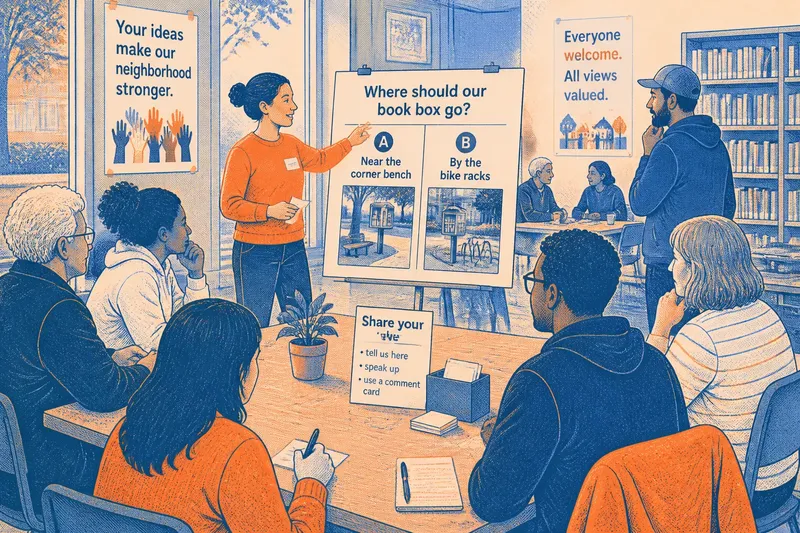
Start with a plain sentence about what the group will do together. “Share ideas for a neighborhood book exchange” gives the event a concrete center. “Build community” is warm in spirit but hard to plan around.
Match the activity to the kind of gathering you want. A book swap can use a few labeled tables; a neighborhood walk needs a route and a clear return point; a shared meal needs a plan for food and cleanup. Resist adding activities simply because the schedule looks sparse. A single well-chosen activity often leaves more room for conversation.
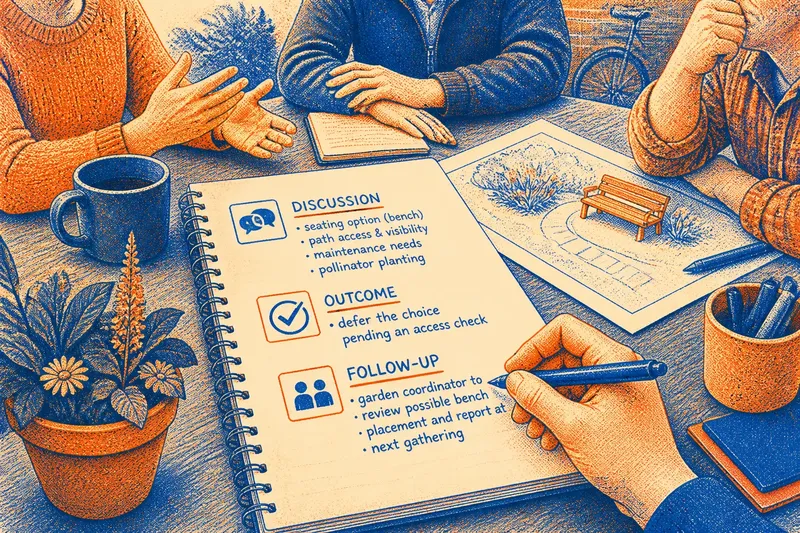
Be clear about whether people are gathering to socialize, make something, or reach a decision. If the event includes a decision, say how it will be made and what is in scope. If it is social, avoid giving the impression that attendees must produce a formal outcome.
Shape the gathering around a simple rhythm
A loose sequence makes a gathering easier to follow without turning it into a production. One useful shape is open arrival, a short welcome, a shared activity, and an unhurried close. Each part has a purpose: people can settle in, understand the plan, take part, and leave without guessing whether something else is about to begin.
Use a visible cue for transitions. A host can announce that the shared activity is starting, or place a simple agenda on a table where everyone can see it. Keep announcements brief and explain what happens next in ordinary language.
Build in flexibility. Someone may arrive late, need a quiet pause, or leave before the end. If the activity can be joined midway, say so; if it cannot, name a natural point when people can enter. A predictable shape should make choices clearer, not force everyone to move in lockstep.
Choose a space that supports the activity
Let the gathering’s purpose guide the room layout. Put materials for a shared project on a table with room to work. For conversation, arrange chairs so people can see one another without creating a formal panel. At a park, choose a recognizable meeting spot and have a weather alternative in mind.
Consider sound, lighting, access, and practical needs when selecting a venue. A loud corner may suit a lively picnic but frustrate a discussion. A library room may work well for a planning conversation, while a community garden offers useful context for a hands-on activity. Describe the venue and any access constraints in the invitation, and provide a way to ask questions.
Set out only what the activity needs. A few supplies arranged where they are used can make the plan self-explanatory; an overfilled table of materials can make a simple gathering feel like an assignment.
Make shared activities easy to enter and leave
Offer an activity with more than one comfortable way to take part. At a neighborhood map table, one person might add a useful local resource, another might read the notes, and someone else might talk through an idea with a neighbor. A shared task can create conversation without requiring everyone to speak to the whole group.
Explain the activity in a short sentence, including whether people can watch, join later, or pass. Keep instructions visible on a small card if the activity has several parts. Avoid giving people a role before they understand what the gathering involves.
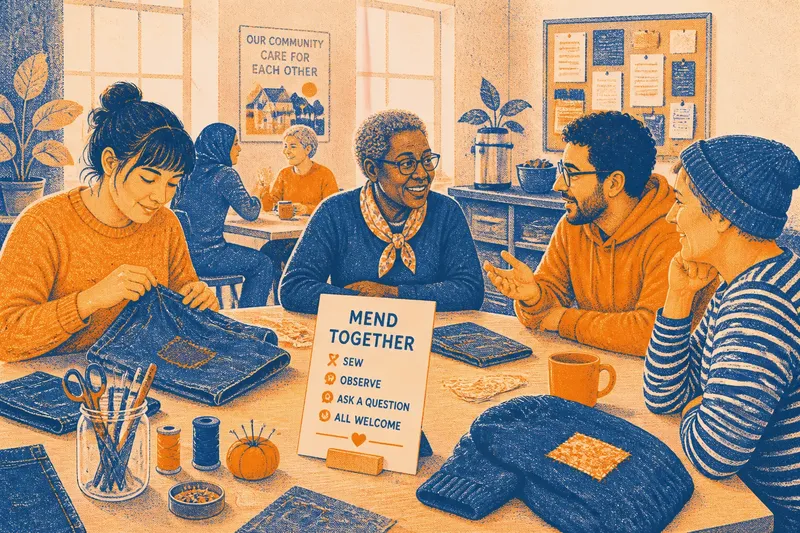
Say you are organizing an invented, hypothetical neighborhood repair café in a community room. The starting point is a table, a few basic sewing supplies, and a gathering intended for people to mend clothing together. You put thread, needles, and fabric patches on one side, add a card inviting people to mend, observe, or ask a sewing question, and leave the center of the table open. The expected result is a clear choice: someone who wants to sew can begin, while a person who would rather talk or watch can still take part without interrupting the activity.
Use a short welcome to explain the plan
A welcome works best as a useful orientation, not a speech. Name the gathering’s purpose, point out the activity and refreshments, and explain the loose schedule. If there is a practical detail—such as where to put dishes or how to find the restroom—include it before people need to ask.
Make the welcome brief enough that conversation and activity can begin. If the gathering is small, a few spoken sentences may be plenty. For a larger group, a simple sign or printed agenda can help people keep track without interrupting the flow.
What should a first-time-friendly neighbourhood gathering include?
How long should the welcome be?
Keep it short enough to explain the purpose, the activity, and what happens next. Add only practical details people need to participate comfortably.
What if attendance is smaller than expected?
Choose an activity that still works at a smaller scale, such as a shared table, an open conversation, or a walk. Skip any group format that depends on a crowd and use the time for the gathering’s stated purpose.
How can a gathering accommodate different levels of participation?
Offer options such as joining the activity, observing, talking with one person, or taking a break. State that these are all acceptable ways to spend the gathering, and avoid repeatedly prompting someone who has chosen to watch.
Check the practical details before sending the invitation
- Check that the invitation states the activity; if the purpose is specific, include it, and if it is vague, rewrite it around one concrete shared activity.
- Check that the location names the building or public space and the meeting point; if those details are clear, keep them, and if not, add an entrance or recognizable landmark.
- Check that the invitation explains the schedule; if arrivals can join late, say so, and if the activity requires a shared start, name that point and explain what late arrivals can do.
- Check whether people need to bring anything; if supplies are provided, say so, and if participants should bring an item, name it and offer a way to take part without it where possible.
- Check that food arrangements are clear; if refreshments are provided, state that, and if food is shared, explain what is optional rather than implying everyone must contribute.
- Check whether the space or activity has an access constraint; if you can describe a suitable route or alternative, include it, and if you are unsure, provide a contact route and ask the venue for accurate information.
- Check whether the event has a weather or venue backup; if a backup is available, state how people will learn about a change, and if there is none, explain what happens if conditions make the gathering impractical.
Close with a useful next point
End the gathering with a clear signal that the planned activity is winding down. Mention where people can find information about a future event, such as a library noticeboard or a community email list, without turning attendance into a commitment.
A first-time-friendly neighbourhood gathering is easier to join when its purpose, rhythm, and shared activity are visible. Put those details in the invitation and reinforce them with a simple welcome; the event then gives people room to participate in a way that suits them.